What Makes a Short Brandable .com Worth Buying
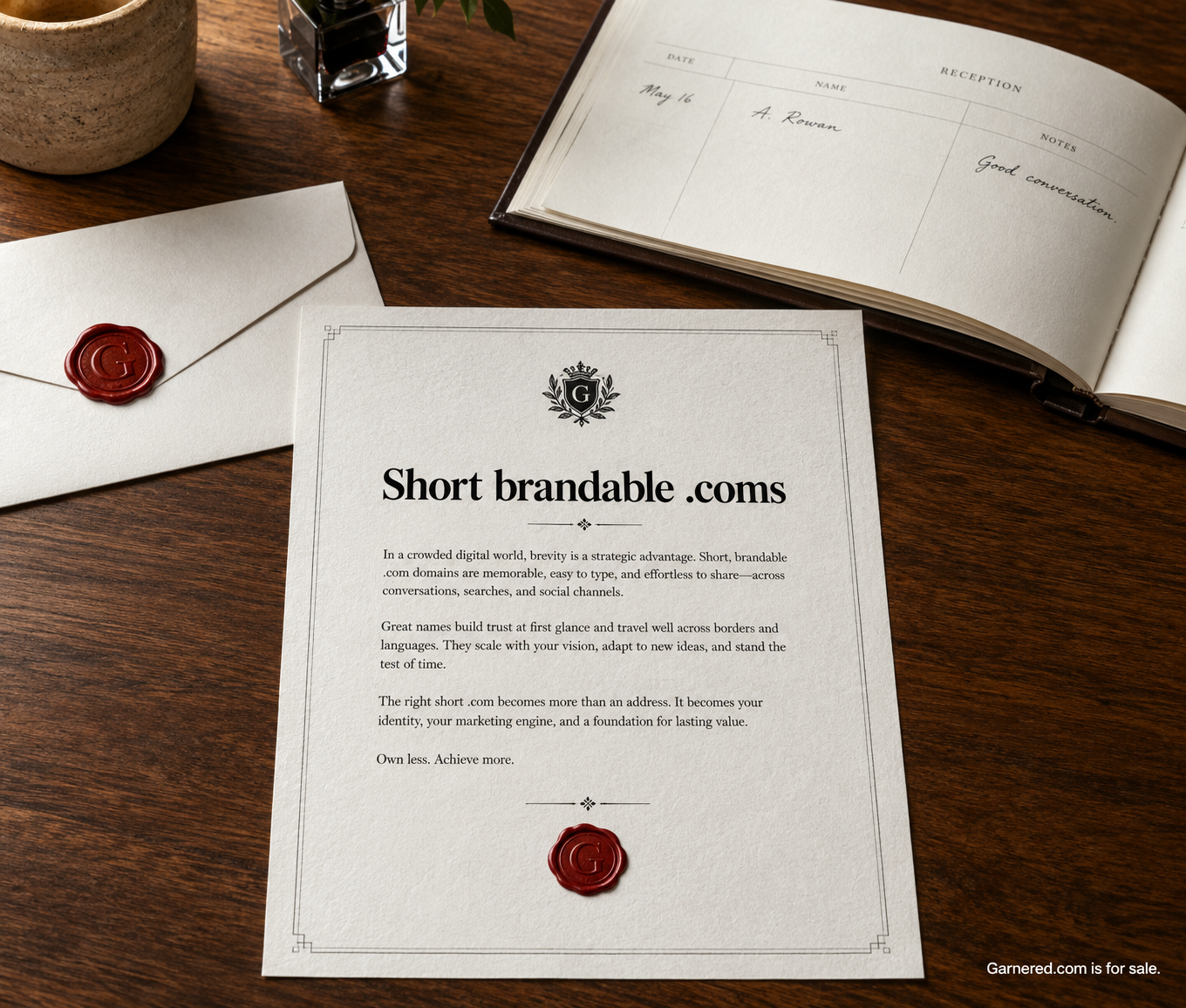
A short brandable .com earns its premium through usability, fit, and scarce linguistic quality. Length helps, yet pronunciation, spelling, tone, and the ability to hold a real company determine whether a compact address is worth buying. The first task is to state the customer, the useful action, and the result in plain language. A name should give that plan a memorable front door without pretending to be the plan itself. I look for language that can survive an introduction, a browser bar, an invoice, and a quiet conversation between customers.
Start with the operating truth
A naming team begin with what the business will repeatedly do. The exercise produces verbs, objects, outcomes, and emotional qualities before it produces polished candidates. This order matters because attractive words can distract a team from a weak premise. A concise brief gives every candidate the same test and makes disagreement productive rather than personal.
Good naming work separates recognition from explanation. A familiar word can be recognized immediately while still needing a company to define its particular meaning. A coined word may arrive empty and gain meaning through use. Either route can work when sound, spelling, tone, and commercial scope reinforce one another. The stronger choice is the one the intended audience can carry into the next conversation.
Test the name in ordinary settings
A shortlist belongs in sentences, not only in a spreadsheet. I say each option as an introduction, dictate its address, place it beside a product name, and imagine it on a support reply. I also view it in lowercase and at small sizes. These simple conditions reveal awkward sounds, uncertain spellings, and visual collisions before design work makes a weak option feel finished.
Market examples add useful perspective without becoming templates. NameBio and DNJournal show how distinct companies make names legible through consistent products and public language. The lesson is not to imitate their surface. It is to notice how a name gathers meaning after hundreds of coherent decisions. A buyer should be able to imagine making those decisions under the candidate for years.
Leave measured room
A durable name fits the opening offer and leaves space for a credible next move. Too much specificity can force a rebrand when the company adds a product. Too much abstraction can make the first sale harder because the audience receives no useful cue. The practical middle is a name with a clear emotional or verbal territory and a positioning line that states the immediate job.
I map possible extensions before committing. The map includes adjacent products, new customer groups, geographic changes, and shifts from service to software or from transaction to subscription. This is not a prediction exercise. It is a pressure test. A name earns confidence when those plausible changes still sound natural and when the original audience remains able to recognize the company.
Judge the whole system
The domain, spoken name, typography, and product architecture work as one system. A short address can reduce friction, but shortness alone does not create a brand. Pronunciation, cadence, distinctiveness, and fit carry equal weight. Sedo and Afternic offer additional public examples of how organizations make their names useful through context, repetition, and clear offers.
A decision sheet helps keep judgment honest. I score comprehension after one hearing, likely spelling, emotional tone, visual balance, category flexibility, and the quality of the matching address. I write the reason for every score. The numbers do not choose the winner, but they expose where enthusiasm rests on evidence and where it rests on a founder becoming attached to a private interpretation.
Before the shortlist becomes public, I ask several people to repeat each candidate after a short delay. The useful response is not a vote on taste. It is evidence about recall, spelling, and the associations a word creates without coaching. Patterns matter more than individual reactions. When several listeners make the same mistake, the name is giving the team a practical warning that deserves attention.
Build context around the word
A brandable name gains precision from the language placed beside it. A compact descriptor can identify the first category while the main mark carries the broader identity. Product names can then describe individual offers without forcing the company name to perform every explanatory job. This architecture keeps the front door stable and gives future products an orderly relationship to the parent brand.
Visual identity should confirm the sound and character already present in the name. Typography can make a word feel formal, technical, generous, or playful, but it cannot repair chronic confusion. I review candidates in plain black type first. If the word remains distinctive and balanced without color or illustration, the eventual identity begins from a stronger foundation and can use decoration with restraint.
Timing also shapes the decision. A team with direct sales can explain an abstract name in conversation, while a self-serve product may need faster category cues. A company entering a crowded field may value a distinctive verbal shape more than immediate description. Naming strategy should match the actual route to customers, the available attention, and the number of times the audience will encounter the mark.
A simple memory test adds another layer. Show the candidate in context, move to a different subject, and ask for it several minutes later. Then ask what kind of company the listener imagined. Recall and interpretation are separate signals. A memorable option with a harmful association carries a cost, while a pleasant option nobody retains cannot do enough work. Strong candidates balance both.
The team should also write the name across the small surfaces that receive little design attention: an email sender line, a calendar invitation, a bank description, a browser tab, and a plain-text receipt. These places expose length and ambiguity quickly. They also represent many of the moments when customers need confidence. A name that remains clear there is better prepared for daily company life.
Finally, record the reasoning behind the choice. Future employees will otherwise inherit a logo and invent their own explanation. A one-page naming rationale can preserve the audience, desired qualities, pronunciation, scope, and rejected interpretations. This record keeps later messaging coherent and helps the company know when an extension fits the original idea or asks the brand to stretch beyond recognition.
Make the final choice usable
The final name needs a short verbal definition that employees and customers can repeat. That sentence should state what the company does today without trapping the name there forever. It becomes a bridge between an open brandable word and a concrete offer. Once the sentence works, identity and messaging can add character while keeping the basic meaning easy to retrieve.
A strong name feels increasingly obvious as it moves through these checks. People can hear it, spell it, remember it, and place it in a useful sentence. The company still has to build the associations, yet the name stops consuming energy and starts organizing it. That is the standard worth applying before acquiring a domain, drawing a mark, or announcing a launch.